Mission
Advance AI-assisted research software engineering and software-engineered AI systems for reproducible, FAIR, and sustainable science.
A joint research laboratory of Wageningen University & Research and the University of Amsterdam, studying how artificial intelligence can advance research software engineering and how software engineering can make AI-enabled science more reliable, reusable, interoperable, scalable, sustainable, and trustworthy.
Scientific discovery increasingly depends on software, data, computational infrastructures, and artificial intelligence. Research software is no longer a hidden by-product of science; it is an executable research asset that captures assumptions, workflows, models, decisions, provenance, and community practice.
The lab brings together complementary expertise from WUR and UvA to address two connected challenges: applying AI to improve the design, maintenance, documentation, testing, and reuse of research software, and applying software engineering principles to improve the reliability, governance, security, sustainability, and long-term maintainability of AI systems.
Our work produces methods, tools, benchmarks, demonstrators, datasets, and training materials for reproducible, FAIR, sustainable, and trustworthy AI-enabled science.
Advance AI-assisted research software engineering and software-engineered AI systems for reproducible, FAIR, and sustainable science.
Connect researchers, RSEs, PhD candidates, data scientists, infrastructure specialists, software architects, and AI engineers.
Produce prototypes, open tools, benchmarks, maturity models, MSc/PhD topics, datasets, publications, workshops, and joint proposals.
AI assistants for coding, testing, refactoring, documentation, repository review, quality assessment, technical debt detection, and scientific software maintenance.
Engineering principles for reliable AI systems, including requirements, architecture, MLOps, observability, testing, governance, and long-term maintainability.
Interoperable infrastructures connecting data, models, workflows, notebooks, cloud, edge, HPC services, catalogues, APIs, and scientific communities.
AI-enhanced virtual labs for collaboration, search, execution, workflow composition, provenance capture, and quality-aware experimentation.
Software metadata, semantic linking, asset search, knowledge graphs, FAIR indicators, reusable catalogues, and domain-aware retrieval over code, data, models, and workflows.
Validation, explainability, privacy, security, compliance, audit trails, provenance, and confidence-building for scientific AI systems.
Executable digital twins that combine data streams, models, simulations, provenance, workflow automation, and infrastructure-aware orchestration for domain science.
Evidence-based model, package, platform, architecture, and infrastructure selection using multi-criteria decision models, empirical data, and sustainability indicators.

Lead for research infrastructures, distributed systems, virtual research environments, data-intensive workflows, digital twins, cloud automation, and infrastructure-aware AI-enabled scientific ecosystems.
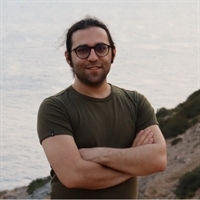
Lead for AI-driven research software engineering, automated decision-making in software engineering, FAIR and sustainable research software, software maturity, and decision support for AI-enabled development.
Postdoctoral researchers contributing to AI, software systems, digital twins, research infrastructures, and scientific workflow engineering.

Research focus: large language models, AI alignment, retrieval-augmented generation, vulnerability analysis, secure software engineering, and AI-assisted development for trustworthy software systems.

Research focus: digital twin composition and optimization, secure scientific workflows, distributed and cloud systems, multi-cloud workflow management, and AI-enabled software systems.
We welcome motivated MSc students interested in AI for research software engineering, digital twins, FAIR software, and AI-enabled scientific workflows.
We collaborate with academic groups, research infrastructures, RSE teams, and domain scientists on methods, tools, demonstrators, and joint publications.
We develop joint proposals around trustworthy AI-enabled science, software-defined research ecosystems, and sustainable digital research infrastructures.
Expertise in distributed systems, digital twins, virtual research environments, cloud computing, data-intensive workflows, and large-scale scientific infrastructures.
Expertise in AI-driven research software engineering, software quality, FAIR software ecosystems, software sustainability, and decision-support systems.
We are open to MSc thesis projects, research visits, postdoctoral collaboration, infrastructure pilots, and joint grant proposals at the intersection of AI, software engineering, and scientific infrastructures.